Plastic bag ban remains only on paper, says KSPCB chief
Staff Reporter
Bangalore: Despite the ban on plastic bags with less than 20 microns thickness, the State Government has not been able to prevent the use and disposal of this environmentally hazardous material, A.S. Sadashivaiah, Chairman of Karnataka State Pollution Control Board, has said.
Karnataka has failed to regulate the material on two counts — first in preventing the plastic bags from entering the State (either from other States or from local manufacturers); and second, in safely disposing of the material, Mr. Sadashivaiah said on Monday. He was speaking at a national workshop on Plastic Waste Management Strategies for a Clean Environment, organised by the Central Institute of Plastics Engineering and Technology (CIPET).
In Bangalore, for instance, 80 per cent of the 150 tonnes of plastic waste disposed of everyday comprises plastic bags thinner than 20 microns. “This goes unsegregated at the domestic level and is not picked up by waste collectors either as it cannot be recycled,” he said. Mr. Sadashivaiah added that district vigilance teams, made up of environmental officers and headed by Deputy Commissioners, set up to monitor pollution, have been instructed to be “more vigilant” about the use and disposal of plastic bags.
Plastic ‘singled out'
Expressing a rather contrary view, Director-General of CIPET S.K. Nayak said that plastic was being “singled out” as the cause of all environmental woes. “Plastic bags happen to be colourful and fly around, which is probably why they are more conspicuous than other pollutants,” he said. Mr. Nayak added that plastic consumed less energy during production than paper, and produced less greenhouse gases when disposed of. It was important, he said, however, that plastic be managed through the collaborative efforts of the government, private companies and non-government organisations.
Kanwar Pal, Secretary, Department of Ecology and Environment, said that banning plastic was no solution and added that the answer to the menace lay in efficient management and in following the motto of reduce, reuse, recover and recycle. A worrying trend was the burning of plastic as it released harmful chemicals such as and Benzo(a)Pyrene and toxic dioxides.
Tuesday, 30 March 2010

Sunday, 7 March 2010
Times Online March 7th
Aloha! We can clear up the Great Pacific Garbage Patch
Michael Stephen, deputy chairman of Symphony Environmental, explains how he can bring back Hawaii’s golden sands
ONCE a five-mile stretch of golden sand, Kamilo beach on the island of Hawaii has become a huge rubbish dump of carrier bags, cigarette lighters, broken toys and other discarded plastic that scars the landscape and could cause lasting damage to the environment.
A British company is aiming to make such detritus a thing of the past. Symphony Environmental has created a substance that can be added to plastic materials to speed up their degradation time from several decades to just a few months.
“We call it superfast biodegradation. All plastic will eventually biodegrade but our technology dramatically accelerates the process,” said Michael Stephen, deputy chairman of Symphony.
The litter that washes up on Kamilo mostly comes from the Great Pacific Garbage Patch, an area of the ocean estimated by some to be twice the size of Texas, where 100m tonnes of floating plastic rubbish poses a threat to thousands of marine animals.
Symphony, based in Borehamwood, Hertfordshire, claims most plastic made with its technology would degrade before it ever reached that part of the world.
The special additive, called d2w, is put into plastic products when they are being manufactured. It works by weakening the carbon bonds, lowering the material’s molecular weight and eventually causing a loss of strength. The plastic can be given a set lifespan, depending on what purpose it is ultimately intended for.
“The point of this is that a bin liner, for example, may require a useful life of 18 months before beginning to lose its strength, whereas a bread bag may require only a few weeks,” said Stephen.
It has been a fight to get the company where it is today.
Founded in 1995, it began creating the technology in partnership with EPI, the environmental products group, in 1998. Their agreement was scrapped in 2003 and EPI tried in the High Court to prevent Symphony going it alone. The claims were dismissed, leaving Symphony free to market and develop its technology.
The recent switch to a licensing model has helped the AIM-listed business make a small profit for the first time. The d2w logo now appears on plastic packaging in 70 countries for companies including Sony and Nokia. In Britain, Barclays, Tesco and JD Sports use Symphony products.
The company has faced stern opposition from rivals. The plastics industry is split into two camps — those that back “oxo-biodegradable” products, such as the d2w range, which break down with exposure to air alone; and those that back “bio-degradable” goods, which rely on specific conditions, such as burial in the ground, to kick-start the process.
“It has been a vicious war and sadly in some cases the bio-producers have convinced British farmers that crop-based plastics are best,” said Stephen. “That is wrong, though, because when they are recycled they give off methane [a potent greenhouse gas].”
He said Symphony is working on a superfast version of its technology that will allow plastics to degrade in less than a month.
Michael Stephen, deputy chairman of Symphony Environmental, explains how he can bring back Hawaii’s golden sands
ONCE a five-mile stretch of golden sand, Kamilo beach on the island of Hawaii has become a huge rubbish dump of carrier bags, cigarette lighters, broken toys and other discarded plastic that scars the landscape and could cause lasting damage to the environment.
A British company is aiming to make such detritus a thing of the past. Symphony Environmental has created a substance that can be added to plastic materials to speed up their degradation time from several decades to just a few months.
“We call it superfast biodegradation. All plastic will eventually biodegrade but our technology dramatically accelerates the process,” said Michael Stephen, deputy chairman of Symphony.
The litter that washes up on Kamilo mostly comes from the Great Pacific Garbage Patch, an area of the ocean estimated by some to be twice the size of Texas, where 100m tonnes of floating plastic rubbish poses a threat to thousands of marine animals.
Symphony, based in Borehamwood, Hertfordshire, claims most plastic made with its technology would degrade before it ever reached that part of the world.
The special additive, called d2w, is put into plastic products when they are being manufactured. It works by weakening the carbon bonds, lowering the material’s molecular weight and eventually causing a loss of strength. The plastic can be given a set lifespan, depending on what purpose it is ultimately intended for.
“The point of this is that a bin liner, for example, may require a useful life of 18 months before beginning to lose its strength, whereas a bread bag may require only a few weeks,” said Stephen.
It has been a fight to get the company where it is today.
Founded in 1995, it began creating the technology in partnership with EPI, the environmental products group, in 1998. Their agreement was scrapped in 2003 and EPI tried in the High Court to prevent Symphony going it alone. The claims were dismissed, leaving Symphony free to market and develop its technology.
The recent switch to a licensing model has helped the AIM-listed business make a small profit for the first time. The d2w logo now appears on plastic packaging in 70 countries for companies including Sony and Nokia. In Britain, Barclays, Tesco and JD Sports use Symphony products.
The company has faced stern opposition from rivals. The plastics industry is split into two camps — those that back “oxo-biodegradable” products, such as the d2w range, which break down with exposure to air alone; and those that back “bio-degradable” goods, which rely on specific conditions, such as burial in the ground, to kick-start the process.
“It has been a vicious war and sadly in some cases the bio-producers have convinced British farmers that crop-based plastics are best,” said Stephen. “That is wrong, though, because when they are recycled they give off methane [a potent greenhouse gas].”
He said Symphony is working on a superfast version of its technology that will allow plastics to degrade in less than a month.
Saturday, 6 March 2010
Latest developments
JAMMU & KASHMIR
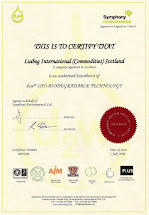
Luibeg are delighted to announce that 21st Century Packaging of Delhi – an ISO 9001-2000 Certified Company and major plastic manufacturer has made an important break-through in supplying d2w oxo-biodegradable bags and packaging to a number of customers in Jammu & Kashmir. Through the magnificent efforts of the 21st Century Packaging Team, Luibeg are the first Organization to introduce the oxo- biodegradable technology to this Region.
21st Century Packaging has been supplying d2w products to major customers in Jammu & Kashmir for over 12 months and product samples have been fully and successfully tested by Symphony Environmental Ltd in the U.K.
Further information will be released shortly regarding the customers who use d2w products.
IN ADDITION
To further our development and prominence in Jammu & Kashmir, Luibeg are very pleased to confirm that we have appointed Swastik Packaging Industries of Jammu as our sole Agent and Distributor for Jammu & Kashmir. The Chairman of this Group, Mr. Pawan K. Shastri has been in the plastic manufacturing industry for many years and is also a Distributor for a major polymer manufacturer. Mr. Shastri has extensive knowledge of the plastic industry and market, and is well acquainted with the manufacturers throughout Jammu & Kashmir. He brings a wealth of experience to our Group and over the past year, has been instrumental in creating awareness of the oxo technology and d2w brand to the State Government and Pollution Board, where extensive discussions and negotiations have been ongoing to ensure that the technology is fully accepted for use in J & K. Swastik Packaging Industries will be using d2w additives in their product manufacturing and have completed trial production runs using d2w and all samples have been successfully tested by Symphony Environmental Ltd in the UK.
Luibeg are delighted to announce that 21st Century Packaging of Delhi – an ISO 9001-2000 Certified Company and major plastic manufacturer has made an important break-through in supplying d2w oxo-biodegradable bags and packaging to a number of customers in Jammu & Kashmir. Through the magnificent efforts of the 21st Century Packaging Team, Luibeg are the first Organization to introduce the oxo- biodegradable technology to this Region.
21st Century Packaging has been supplying d2w products to major customers in Jammu & Kashmir for over 12 months and product samples have been fully and successfully tested by Symphony Environmental Ltd in the U.K.
Further information will be released shortly regarding the customers who use d2w products.
IN ADDITION
To further our development and prominence in Jammu & Kashmir, Luibeg are very pleased to confirm that we have appointed Swastik Packaging Industries of Jammu as our sole Agent and Distributor for Jammu & Kashmir. The Chairman of this Group, Mr. Pawan K. Shastri has been in the plastic manufacturing industry for many years and is also a Distributor for a major polymer manufacturer. Mr. Shastri has extensive knowledge of the plastic industry and market, and is well acquainted with the manufacturers throughout Jammu & Kashmir. He brings a wealth of experience to our Group and over the past year, has been instrumental in creating awareness of the oxo technology and d2w brand to the State Government and Pollution Board, where extensive discussions and negotiations have been ongoing to ensure that the technology is fully accepted for use in J & K. Swastik Packaging Industries will be using d2w additives in their product manufacturing and have completed trial production runs using d2w and all samples have been successfully tested by Symphony Environmental Ltd in the UK.
Sunday, 7 February 2010
High Paxton's Blog
More on Killer Plastic – The indigestability of plastic bags.
By Hugh Paxton
“In answer to the rather silly myth that has been promulgated that it isn’t worth using biodegradable materials because modern landfills are fully sealed, the very obvious point should be noted that most plastic bags aren’t ending up in sealed landfills!”
Seeing these hideous images of choked seabirds from Midway atoll in your article The Long Arm Of Plastic reminds me to put my mouth where my money is and talk about the merits of biodegradable plastic. The sad fact is that improper disposal of waste plastic is having a very deleterious effect on a lot of wildlife, it is truly an international problem of epic proportions.
Wouldn’t it be awful if the sea turtles which managed to survive the cataclysmic termination of the dinosaurs could be hastened to extinction by plastic bags? Yet that is exactly what is happening.
Many species of sea turtles that munch upon jelly fish for a living are cutting short their sweet lives by choking their alimentary tracts with plastic bags. Sadly, they can’t distinguish between a healthy coelenterate supper and the diaphanous floating billows of plastic bags.
Even if they mistake just 1 in a 1000 meals – the sheer quantity of plastic waste in our oceans coupled with its very slow decomposition, the turtles’ need for a high rate of consumption ( due to the low nutritional content of their jelly-fish prey) and their slow breeding rate means that the odds are stacked heavily against sea turtle survival.
Whether these bags were carelessly dumped or just plucked by the wind from trash cans, heaps, picnic bags or boats matters little to the turtles. What does matter, and this matters a lot, is the size of the jetsam and the amount of time it remains an environmental hazard after it has served its useful purpose to humanity.
Thankfully there is a solution; it is to replace conventional long-lived plastics with plastics that are programmed to biodegrade in about 6 months under normal conditions of careless disposal or on an open rubbish dump!
Symphony Environmental plc add proprietary granules to plastic in the manufacturing process that retain the strength of the plastic during its short span of useful service to mankind and then enable decomposition to set in from exposure to moisture and air when decomposition becomes the new priority.On their website Symphony claims:
“Our d2w® additive put into the plastic at the extrusion stage will make the finished product “oxo-biodegradable” so that it will degrade and disappear in a short timescale, leaving no fragments, no methane and no harmful residues.Degradability is not a disposal option – you can still re-use and recycle – it is low cost insurance against the accumulation of plastic waste in the environment.”
Brilliant.
Symphony franchises its proprietary biodegradable plastic technology internationally and I am happy to say that they are rapidly expanding their operations and now have customers in Europe, North, South and Central America, The Middle East, India and The Far East.
In answer to the rather silly myth that has been promulgated that it isn’t worth using biodegradable materials because modern landfills are fully sealed, the very obvious point should be noted that most plastic bags aren’t ending up in sealed landfills!
While I may not have enough shares in Symphony to make much of a financial difference to me, I know that every biodegradable plastic bag that replaces a non-biodegradable one is one less choking hazard for our Chelonian friends.
By Hugh Paxton
“In answer to the rather silly myth that has been promulgated that it isn’t worth using biodegradable materials because modern landfills are fully sealed, the very obvious point should be noted that most plastic bags aren’t ending up in sealed landfills!”
Seeing these hideous images of choked seabirds from Midway atoll in your article The Long Arm Of Plastic reminds me to put my mouth where my money is and talk about the merits of biodegradable plastic. The sad fact is that improper disposal of waste plastic is having a very deleterious effect on a lot of wildlife, it is truly an international problem of epic proportions.
Wouldn’t it be awful if the sea turtles which managed to survive the cataclysmic termination of the dinosaurs could be hastened to extinction by plastic bags? Yet that is exactly what is happening.
Many species of sea turtles that munch upon jelly fish for a living are cutting short their sweet lives by choking their alimentary tracts with plastic bags. Sadly, they can’t distinguish between a healthy coelenterate supper and the diaphanous floating billows of plastic bags.
Even if they mistake just 1 in a 1000 meals – the sheer quantity of plastic waste in our oceans coupled with its very slow decomposition, the turtles’ need for a high rate of consumption ( due to the low nutritional content of their jelly-fish prey) and their slow breeding rate means that the odds are stacked heavily against sea turtle survival.
Whether these bags were carelessly dumped or just plucked by the wind from trash cans, heaps, picnic bags or boats matters little to the turtles. What does matter, and this matters a lot, is the size of the jetsam and the amount of time it remains an environmental hazard after it has served its useful purpose to humanity.
Thankfully there is a solution; it is to replace conventional long-lived plastics with plastics that are programmed to biodegrade in about 6 months under normal conditions of careless disposal or on an open rubbish dump!
Symphony Environmental plc add proprietary granules to plastic in the manufacturing process that retain the strength of the plastic during its short span of useful service to mankind and then enable decomposition to set in from exposure to moisture and air when decomposition becomes the new priority.On their website Symphony claims:
“Our d2w® additive put into the plastic at the extrusion stage will make the finished product “oxo-biodegradable” so that it will degrade and disappear in a short timescale, leaving no fragments, no methane and no harmful residues.Degradability is not a disposal option – you can still re-use and recycle – it is low cost insurance against the accumulation of plastic waste in the environment.”
Brilliant.
Symphony franchises its proprietary biodegradable plastic technology internationally and I am happy to say that they are rapidly expanding their operations and now have customers in Europe, North, South and Central America, The Middle East, India and The Far East.
In answer to the rather silly myth that has been promulgated that it isn’t worth using biodegradable materials because modern landfills are fully sealed, the very obvious point should be noted that most plastic bags aren’t ending up in sealed landfills!
While I may not have enough shares in Symphony to make much of a financial difference to me, I know that every biodegradable plastic bag that replaces a non-biodegradable one is one less choking hazard for our Chelonian friends.
Plastics News.com
Oxo-biodegradable additive suppliers rebut critics
By Frank Esposito
PLASTICS NEWS STAFF
Posted February 2, 2010
VANCOUVER, BRITISH COLUMBIA (Updated Feb. 4, 1:25 p.m. ET) --
A pair of oxo-biodegradable plastic additive makers have fired back at the Society of the Plastics Industry’s Bioplastics Council over claims of biodegradability.
The Bioplastics Council had questioned such claims in a 5-page position paper released Jan. 28, saying that “the issue is one of claiming biodegradation where there is not data to support those claims, or to prove biodegradability as per accepted standards.”
In a Feb. 1 rebuttal, officials with additives maker EPI Environmental Products Inc. of Vancouver, British Columbia, said the Bioplastics Council and a similar European trade group “are inherently biased against competing technologies, and … have once again sought to discredit oxo-biodegradable plastics technology through their ongoing campaign of misinformation and rumor-mongering.”
EPI officials battle on for five pages, disputing the council’s claims and adding several claims defending its own products.
A similar rebuttal from additives maker Symphony Environmental Technologies plc of Borehamwood, England, was less polite.
“The increasingly desperate efforts of the hydro-biodegradable (vegetable-based or ‘compostable’) plastic companies to rubbish oxo-biodegradable plastics are becoming laughable,” Symphony officials said in a Feb. 1 release. “Their latest tactic is to form themselves in the U.S.A. into a very official-sounding organization called the ‘Bioplastics Council’ and to attach it to the respected Society of the Plastics Industry.”
“This ‘Council’ has recently issued a Position Paper which repeats the allegations made against oxo-biodegradable plastics in July 2009 by an organization called ‘European Bioplastics.’ Not surprising really — as they are financed by some of the same companies for the same purpose.”
EPI officials had disputed similar claims made by European Bioplastics in August.
In response to the criticism from EPI and Symphony, the SPI Bioplastics Council issued a statement:
“The SPI Bioplastics Council’s position paper on oxo-biodegradable technologies was drafted with considerable thought and deliberation, and was released on January 28 after extensive review and due diligence. We strongly stand by the position taken, and reiterate that it is the duty of industry to provide consumers with clear information supported by scientific data so that marketing claims do in fact match product results.”
The Bioplastics Council is comprised of eight member companies: Arkema, BASF Corp., Cereplast Inc., DuPont Co., NatureWorks LLC, PolyOne Corp., Teknor Apex and Telles, the joint venture company of Metabolix and Archer Daniels Midland. Seven of those eight — with the exception of Teknor Apex — also are members of European Bioplastics, a trade group formed in 2006.
Two other recycling-focused trade groups – the Association of Postconsumer Plastic Recyclers (APR) and the National Association for PET Container Resources (NAPCOR) also have raised concerns about oxo-biodegradable additives. APR in particular has challenged additives producers to produce evidence that their products won’t ultimately weaken products made from recycled resins.
Steve Alexander, executive director of APR, said degradable additives have at least two environmental hurdles to overcome.
“First, do the additives in fact lead to degradation of plastic molecules to carbon dioxide and water? Doubts and claims abound, particularly about timeframes. While such discussions are interesting and necessary, we as citizens wonder if degradation leads to environmental benefit on its own or is degradation an environmental negative and initiation of new environmental issues. We believe the greater environmental benefit and sustainable action is to use the plastic molecule again and not waste it,” Alexander said in a statement.
“Second, and more pertinent to our interests in plastics recycling, we wonder how the additives affect the process of recycling, the making of the next item from recycled plastic, and the service life of the next item, Alexander said. “Premature demise of items made of recycled plastic which contain degradable additives is not helpful. The early failure of some items impacts the reputation of all.”
Alexander said APR is pleased that some companies, such as Symphony, have excluded PET as a targeted resin, and that some are proceeding to test their materials per the APR degradable additives protocol.
By Frank Esposito
PLASTICS NEWS STAFF
Posted February 2, 2010
VANCOUVER, BRITISH COLUMBIA (Updated Feb. 4, 1:25 p.m. ET) --
A pair of oxo-biodegradable plastic additive makers have fired back at the Society of the Plastics Industry’s Bioplastics Council over claims of biodegradability.
The Bioplastics Council had questioned such claims in a 5-page position paper released Jan. 28, saying that “the issue is one of claiming biodegradation where there is not data to support those claims, or to prove biodegradability as per accepted standards.”
In a Feb. 1 rebuttal, officials with additives maker EPI Environmental Products Inc. of Vancouver, British Columbia, said the Bioplastics Council and a similar European trade group “are inherently biased against competing technologies, and … have once again sought to discredit oxo-biodegradable plastics technology through their ongoing campaign of misinformation and rumor-mongering.”
EPI officials battle on for five pages, disputing the council’s claims and adding several claims defending its own products.
A similar rebuttal from additives maker Symphony Environmental Technologies plc of Borehamwood, England, was less polite.
“The increasingly desperate efforts of the hydro-biodegradable (vegetable-based or ‘compostable’) plastic companies to rubbish oxo-biodegradable plastics are becoming laughable,” Symphony officials said in a Feb. 1 release. “Their latest tactic is to form themselves in the U.S.A. into a very official-sounding organization called the ‘Bioplastics Council’ and to attach it to the respected Society of the Plastics Industry.”
“This ‘Council’ has recently issued a Position Paper which repeats the allegations made against oxo-biodegradable plastics in July 2009 by an organization called ‘European Bioplastics.’ Not surprising really — as they are financed by some of the same companies for the same purpose.”
EPI officials had disputed similar claims made by European Bioplastics in August.
In response to the criticism from EPI and Symphony, the SPI Bioplastics Council issued a statement:
“The SPI Bioplastics Council’s position paper on oxo-biodegradable technologies was drafted with considerable thought and deliberation, and was released on January 28 after extensive review and due diligence. We strongly stand by the position taken, and reiterate that it is the duty of industry to provide consumers with clear information supported by scientific data so that marketing claims do in fact match product results.”
The Bioplastics Council is comprised of eight member companies: Arkema, BASF Corp., Cereplast Inc., DuPont Co., NatureWorks LLC, PolyOne Corp., Teknor Apex and Telles, the joint venture company of Metabolix and Archer Daniels Midland. Seven of those eight — with the exception of Teknor Apex — also are members of European Bioplastics, a trade group formed in 2006.
Two other recycling-focused trade groups – the Association of Postconsumer Plastic Recyclers (APR) and the National Association for PET Container Resources (NAPCOR) also have raised concerns about oxo-biodegradable additives. APR in particular has challenged additives producers to produce evidence that their products won’t ultimately weaken products made from recycled resins.
Steve Alexander, executive director of APR, said degradable additives have at least two environmental hurdles to overcome.
“First, do the additives in fact lead to degradation of plastic molecules to carbon dioxide and water? Doubts and claims abound, particularly about timeframes. While such discussions are interesting and necessary, we as citizens wonder if degradation leads to environmental benefit on its own or is degradation an environmental negative and initiation of new environmental issues. We believe the greater environmental benefit and sustainable action is to use the plastic molecule again and not waste it,” Alexander said in a statement.
“Second, and more pertinent to our interests in plastics recycling, we wonder how the additives affect the process of recycling, the making of the next item from recycled plastic, and the service life of the next item, Alexander said. “Premature demise of items made of recycled plastic which contain degradable additives is not helpful. The early failure of some items impacts the reputation of all.”
Alexander said APR is pleased that some companies, such as Symphony, have excluded PET as a targeted resin, and that some are proceeding to test their materials per the APR degradable additives protocol.
Tuesday, 2 February 2010
Government of India, press office
Ministry of environment and forests
Status of Implementation of Plastic Wastes Management in States / Union Territories
Delhi , February 1,2010
Various States have increased the minimum thickness of plastic carry bags to even higher limits of 40, 50, or 70 microns. These States/ UTs are: Goa (40 micron), Himachal Pradesh ( 70 micron; HP Cabinet decided to ban plastics in the entire State with effect from 15.08.2009), Maharashtra (50 micron), Meghalaya ( 40 micron), Punjab (30 micron), Chandigarh (30 micron), West Bengal (40 micron ), Kerala (30 micron)
(a) The Government of Delhi issued a notification dated 21st November 2008 titled “ the Delhi Degradable Plastic Bag ( Manufacturing, Sale and Usage )and Garbage (Control) (Amendment ) Act, 2008” Section 11(b0 of this notification stipulates that no person shall manufacture, stock, distribute or sell plastic begs made of virgin of recycled, degradable or non –degradable plastic bags which are less than 40 microns in thickness. Another notification issued on 7th January 2009 under the powers delegated to Government of Delhi by the Central Government under Section -5 of the Environment (Protection ) Act, 1986, which prohibits the use, sale and storage off all kinds of plastic bags in Five Star and Four Star Hotels, Hospitals with 100 more beds except the use of plastic bags as pres cribbed under Bio-medical Waste (management and handling) Rules, seats, all fruits and vegetable outlets selling different consumer products including fruits and vegetables.
(b) West Bengal Pollution Control Board has banned manufacture, sale and use of plastic carry bags in ecologically fragile areas viz the entire Sunderban areas, Hilly areas of Darjeeling distinct, Sub-division, CRZ areas (Digha, Sagar, Bakkhali etc.), Forest areas and in different heritage and tourist site.
(c) Action has been initiated for public awareness (trainings, workshops) for plastic waste management such as proper disposal of plastic bottles, banning of plastic carry bags, use of cloth/jute bags etc.
(d) Coloured Plastic carry bags have been banned in Himachal Pradesh. Use of plastic carry begs have been banned in some districts in Mizoram /West Bengal
(e) Jammu and Kashmir has also banned polythene carry bags under Non Bio- Degradable Material (Management, Handling and Disposal) Act, 2007 with effect from 11.5.2009.(f) Government of Himachal Pradesh has taken a cabinet decision for complete bad of plastics in Himachal Pradesh under the HP Non-Biodegradable Garbage Control Act, 1995 effective from 15th August 2009.
KP
Status of Implementation of Plastic Wastes Management in States / Union Territories
Delhi , February 1,2010
Various States have increased the minimum thickness of plastic carry bags to even higher limits of 40, 50, or 70 microns. These States/ UTs are: Goa (40 micron), Himachal Pradesh ( 70 micron; HP Cabinet decided to ban plastics in the entire State with effect from 15.08.2009), Maharashtra (50 micron), Meghalaya ( 40 micron), Punjab (30 micron), Chandigarh (30 micron), West Bengal (40 micron ), Kerala (30 micron)
(a) The Government of Delhi issued a notification dated 21st November 2008 titled “ the Delhi Degradable Plastic Bag ( Manufacturing, Sale and Usage )and Garbage (Control) (Amendment ) Act, 2008” Section 11(b0 of this notification stipulates that no person shall manufacture, stock, distribute or sell plastic begs made of virgin of recycled, degradable or non –degradable plastic bags which are less than 40 microns in thickness. Another notification issued on 7th January 2009 under the powers delegated to Government of Delhi by the Central Government under Section -5 of the Environment (Protection ) Act, 1986, which prohibits the use, sale and storage off all kinds of plastic bags in Five Star and Four Star Hotels, Hospitals with 100 more beds except the use of plastic bags as pres cribbed under Bio-medical Waste (management and handling) Rules, seats, all fruits and vegetable outlets selling different consumer products including fruits and vegetables.
(b) West Bengal Pollution Control Board has banned manufacture, sale and use of plastic carry bags in ecologically fragile areas viz the entire Sunderban areas, Hilly areas of Darjeeling distinct, Sub-division, CRZ areas (Digha, Sagar, Bakkhali etc.), Forest areas and in different heritage and tourist site.
(c) Action has been initiated for public awareness (trainings, workshops) for plastic waste management such as proper disposal of plastic bottles, banning of plastic carry bags, use of cloth/jute bags etc.
(d) Coloured Plastic carry bags have been banned in Himachal Pradesh. Use of plastic carry begs have been banned in some districts in Mizoram /West Bengal
(e) Jammu and Kashmir has also banned polythene carry bags under Non Bio- Degradable Material (Management, Handling and Disposal) Act, 2007 with effect from 11.5.2009.(f) Government of Himachal Pradesh has taken a cabinet decision for complete bad of plastics in Himachal Pradesh under the HP Non-Biodegradable Garbage Control Act, 1995 effective from 15th August 2009.
KP
Sunday, 31 January 2010
Daily Times India
Himachal promoting use of plastic waste to build roads
Shimla, Jan 31
Buoyed by the successful use of plastic waste to build three stretches of road, the Himachal Pradesh government will now use all the plastic waste it collected during a drive last month for road surfacing.
During the weeklong ‘Polythene Hatao, Paryavaran Bachao (remove polythene, save environment)’ campaign carried out across the state, about 1,381 quintals of waste was collected, a government spokesperson said.
“The entire plastic waste (1,381 quintals) would be used for laying plastic-bitumen mix roads in the state. This waste would be sufficient to tar a stretch of 138 km,” said the spokesperson.
The Himachal Pradesh State Pollution Control Board in collaboration with the Public Works Department (PWD) has built three road stretches on a pilot basis by using shredded plastic waste on the outskirts of Shimla.
The waste plastic such as carry bags, disposable cups, laminated plastics like pouches of chips, pan masala, aluminium foil and packaging material used for biscuits, chocolates, milk and grocery items was used in surfacing roads.
“The results have been good in the past four months as there has been no stripping or any other major damage to the roads laid by using plastic-asphalt mix. Of course, the plastic blend not only helps lowering the cost of tarring but also enhances the durability of roads because of higher binding strength of plastic,” PWD superintending engineer Naresh Sharma told IANS.
Explaining the rationale for using the waste plastic in road construction, he said if plastic waste could be mixed up to 15 percent, this would lead to saving of equivalent quantity of asphalt, reducing the overall construction cost.
“The plastic waste replaces 10 to 15 percent of the bitumen and thus saves approximately Rs.35,000 to Rs.45,000 per km of a road stretch,” Sharma added.
Himachal Pradesh imposed on Oct 2, 2009, a ban on the production, storage, use, sale and distribution of all types of polythene bags made of non-biodegradable materials.
The government is also planning to include all plastic materials like disposable plates, cups and glasses in the ambit of the ban.
The ban on use of coloured polythene bags manufactured from recycled plastic was initially imposed Jan 1, 1999. Later in 2004, the ban was imposed under Section 7(h) of the State Non-Biodegradable Garbage (Control) Rules on the use of small polythene bags having thickness less than 70 microns and size less than 18″x12″.
But last year a total ban was imposed on the use of polythene bags of all types and sizes.
Before the partial implementation of the ban in 2004, polythene pollution was a major problem in the state. During the monsoon, the rainwater brought along heaps of polythene bags and other non-biodegradable material that choked most drains.
Shimla, Jan 31
Buoyed by the successful use of plastic waste to build three stretches of road, the Himachal Pradesh government will now use all the plastic waste it collected during a drive last month for road surfacing.
During the weeklong ‘Polythene Hatao, Paryavaran Bachao (remove polythene, save environment)’ campaign carried out across the state, about 1,381 quintals of waste was collected, a government spokesperson said.
“The entire plastic waste (1,381 quintals) would be used for laying plastic-bitumen mix roads in the state. This waste would be sufficient to tar a stretch of 138 km,” said the spokesperson.
The Himachal Pradesh State Pollution Control Board in collaboration with the Public Works Department (PWD) has built three road stretches on a pilot basis by using shredded plastic waste on the outskirts of Shimla.
The waste plastic such as carry bags, disposable cups, laminated plastics like pouches of chips, pan masala, aluminium foil and packaging material used for biscuits, chocolates, milk and grocery items was used in surfacing roads.
“The results have been good in the past four months as there has been no stripping or any other major damage to the roads laid by using plastic-asphalt mix. Of course, the plastic blend not only helps lowering the cost of tarring but also enhances the durability of roads because of higher binding strength of plastic,” PWD superintending engineer Naresh Sharma told IANS.
Explaining the rationale for using the waste plastic in road construction, he said if plastic waste could be mixed up to 15 percent, this would lead to saving of equivalent quantity of asphalt, reducing the overall construction cost.
“The plastic waste replaces 10 to 15 percent of the bitumen and thus saves approximately Rs.35,000 to Rs.45,000 per km of a road stretch,” Sharma added.
Himachal Pradesh imposed on Oct 2, 2009, a ban on the production, storage, use, sale and distribution of all types of polythene bags made of non-biodegradable materials.
The government is also planning to include all plastic materials like disposable plates, cups and glasses in the ambit of the ban.
The ban on use of coloured polythene bags manufactured from recycled plastic was initially imposed Jan 1, 1999. Later in 2004, the ban was imposed under Section 7(h) of the State Non-Biodegradable Garbage (Control) Rules on the use of small polythene bags having thickness less than 70 microns and size less than 18″x12″.
But last year a total ban was imposed on the use of polythene bags of all types and sizes.
Before the partial implementation of the ban in 2004, polythene pollution was a major problem in the state. During the monsoon, the rainwater brought along heaps of polythene bags and other non-biodegradable material that choked most drains.
Saturday, 30 January 2010
Plastic fantastic?
Mumbai: BMC may cancel licence if plastic diktat is flouted
January 30, 2010
MUMBAI: The Brihanmumbai Municipal Corporation (BMC) proposes to cancel the licences of those commercial establishments found selling plastic carry bags below 50 microns.
The harsh punishment is being recommended as part of a string of measures the civic body will forward to the state government, to curb the menace of plastic bags.
The new BMC proposal will be tabled before the civic house next week. Once cleared, the civic body will ask the state to make necessary changes to the Maharashtra Non-Biodegradable Garbage (Control) Ordinance, 2006.
“The licences of errant establishment — dealers and retailers — will be cancelled if they are found to be selling plastic bags below the prescribed limit,’’ said a senior civic official of the BMC shops and establishment.The municipal corporation has 4.78 lakh shops, commercial establishment, hotels, restaurants and eating houses, registered under the Bombay Shops and Establishments Act, 1948. The other measures recommended in the new proposal include one that errant manufacturers must be prosecuted. Litigation will act as a deterrent against those who produce unauthorised bags, officials said.
Currently, first-time offenders are fined Rs 5,000 and second-time offenders, Rs 10,000. Third-time offenders are fined Rs 25,000 and can be sentenced to a three-month jail term.
The BMC has also suggested suitable changes in the existing laws to make consumers responsible for aiding and abetting circulation of banned plastic bag.
A fine ranging from Rs 5 to Rs 100 would be imposed on anyone found carrying plastic bags of a thickness less than 50 microns. The thickness limit of 50 micron could also be altered to that of 70, officials said. The idea is to make the existing rules more stringent to discourage manufacturing, use and circulation of banned plastic, since it is difficult to take action against manufacturing units, most of which are located outside city limits. Within the city, it is the responsibility of Maharashtra Pollution Control Board (MPCB) to take action, an offical said. “We can only take action against them at our Octroi check nakas. However, even that is difficult since unauthorised plastic is mostly smuggled under the garb of miscellaneous goods,’’ said additional municipal commissioner R A Rajeev.
January 30, 2010
MUMBAI: The Brihanmumbai Municipal Corporation (BMC) proposes to cancel the licences of those commercial establishments found selling plastic carry bags below 50 microns.
The harsh punishment is being recommended as part of a string of measures the civic body will forward to the state government, to curb the menace of plastic bags.
The new BMC proposal will be tabled before the civic house next week. Once cleared, the civic body will ask the state to make necessary changes to the Maharashtra Non-Biodegradable Garbage (Control) Ordinance, 2006.
“The licences of errant establishment — dealers and retailers — will be cancelled if they are found to be selling plastic bags below the prescribed limit,’’ said a senior civic official of the BMC shops and establishment.The municipal corporation has 4.78 lakh shops, commercial establishment, hotels, restaurants and eating houses, registered under the Bombay Shops and Establishments Act, 1948. The other measures recommended in the new proposal include one that errant manufacturers must be prosecuted. Litigation will act as a deterrent against those who produce unauthorised bags, officials said.
Currently, first-time offenders are fined Rs 5,000 and second-time offenders, Rs 10,000. Third-time offenders are fined Rs 25,000 and can be sentenced to a three-month jail term.
The BMC has also suggested suitable changes in the existing laws to make consumers responsible for aiding and abetting circulation of banned plastic bag.
A fine ranging from Rs 5 to Rs 100 would be imposed on anyone found carrying plastic bags of a thickness less than 50 microns. The thickness limit of 50 micron could also be altered to that of 70, officials said. The idea is to make the existing rules more stringent to discourage manufacturing, use and circulation of banned plastic, since it is difficult to take action against manufacturing units, most of which are located outside city limits. Within the city, it is the responsibility of Maharashtra Pollution Control Board (MPCB) to take action, an offical said. “We can only take action against them at our Octroi check nakas. However, even that is difficult since unauthorised plastic is mostly smuggled under the garb of miscellaneous goods,’’ said additional municipal commissioner R A Rajeev.
Friday, 29 January 2010
Today's press
New Kerala.com
SC not to lift ban on use of plastic bags
New Delhi, Jan 29 :
The Supreme Court today refused to lift the ban on the use on plastic and polythene bags.
A bench headed by Chief Justice of India K G Balakrishnan today declined the plea of the All India Plastic Manufacturers Association for staying the operation of Delhi High Court judgement which had banned the use of polythene bags in the national capital.
Earlier, counsel for the petitioner submitted before the court that the use of polythene bags do not cause environmental pollution. Also the livelihood of the people working in the plastic industry was at stake.
The apex court was, however, not impressed by the contention of the petitioner.
---------------------
India Environment Portal
Now, 70-micron plastic bags may come under ban
Sandeep Ashar / DNA
Friday, January 29
Mumbai: The ban on polythene bags may get extended beyond 50 microns. The civic administration, which was recently asked by the government to formulate a draft suggesting revisions to the existing ban, is likely to recommend the inclusion of plastic bags made up of polythene thicker than 50 microns in the ban’s ambit.
Unconfirmed reports suggested that to increase the efficacy of the ban, carrybags below 70 microns could well be brought under the scanner.
The anti-plastic carrybag drive begun with a ban on the use of plastic below 20 microns in 2005. A year later, the ban was extended to below 50-micron plastic. A senior civic official said that any ban has to be progressive in nature. The draft recommendations prepared by the civic body will be tabled before the corporation next week.
The draft will also suggest recommendations of including thin bags (not classified as carrybags) in the ban’s ambit. Current provisions in the Maharashtra Non-Biodegradable Garbage (Control) Ordinance, 2006, exclude thin plastic.
The civic administration is likely to press for a restriction on the use of materials like cups and plates made of thin plastic.
Dr Mahindra Parmar, president, All India Plastic Manufacturers’ Association, said that his organisation will not have an objection to an extension of the ban to 70 micron. “We feel that this will only increase the tendency of the people to re-use permitted plastic. This will lead to a reduction in discarded plastic,” he said.
Dr Parmar also said that quality polythene bags are made of above 100-micron plastic. He, however, added that ban on plastic of any thickness will not work till proper arrangements are made for its efficient disposal. The association has proposed to work with the BMC to set up recycling centres.
SC not to lift ban on use of plastic bags
New Delhi, Jan 29 :
The Supreme Court today refused to lift the ban on the use on plastic and polythene bags.
A bench headed by Chief Justice of India K G Balakrishnan today declined the plea of the All India Plastic Manufacturers Association for staying the operation of Delhi High Court judgement which had banned the use of polythene bags in the national capital.
Earlier, counsel for the petitioner submitted before the court that the use of polythene bags do not cause environmental pollution. Also the livelihood of the people working in the plastic industry was at stake.
The apex court was, however, not impressed by the contention of the petitioner.
---------------------
India Environment Portal
Now, 70-micron plastic bags may come under ban
Sandeep Ashar / DNA
Friday, January 29
Mumbai: The ban on polythene bags may get extended beyond 50 microns. The civic administration, which was recently asked by the government to formulate a draft suggesting revisions to the existing ban, is likely to recommend the inclusion of plastic bags made up of polythene thicker than 50 microns in the ban’s ambit.
Unconfirmed reports suggested that to increase the efficacy of the ban, carrybags below 70 microns could well be brought under the scanner.
The anti-plastic carrybag drive begun with a ban on the use of plastic below 20 microns in 2005. A year later, the ban was extended to below 50-micron plastic. A senior civic official said that any ban has to be progressive in nature. The draft recommendations prepared by the civic body will be tabled before the corporation next week.
The draft will also suggest recommendations of including thin bags (not classified as carrybags) in the ban’s ambit. Current provisions in the Maharashtra Non-Biodegradable Garbage (Control) Ordinance, 2006, exclude thin plastic.
The civic administration is likely to press for a restriction on the use of materials like cups and plates made of thin plastic.
Dr Mahindra Parmar, president, All India Plastic Manufacturers’ Association, said that his organisation will not have an objection to an extension of the ban to 70 micron. “We feel that this will only increase the tendency of the people to re-use permitted plastic. This will lead to a reduction in discarded plastic,” he said.
Dr Parmar also said that quality polythene bags are made of above 100-micron plastic. He, however, added that ban on plastic of any thickness will not work till proper arrangements are made for its efficient disposal. The association has proposed to work with the BMC to set up recycling centres.
Thursday, 28 January 2010
From the press
OneIndia
Plastic garbage turns off for tourists in Himachal Pradesh
Kufri, Jan 28
The plastic garbage scattered in the Kufri region of Himachal Pradesh has been disappointing the tourists visiting the region.
Although Himachal Pradesh became the first state in India to impose a ban on the use of plastic bags on June 5, 2004, many shopkeepers across the state continue to use plastic bags in gross violation of the law.
The plastic waste scattered in and around the Mahasu Peak, one of the main attractions of the Kufri region.Located at an altitude of 10,000-feet above sea level, the Mahasu Peak is the highest in Kufri, and experiences heavy snowfall between the months of December and February.
"My impression before coming to this place was that it is a very beautiful place and we were expecting a lot of snowfall here, but when we came here, the impression was too bad. There is no proper disposable garbage. There is garbage all around. The municipal committee of this place should install more and more hoardings, and should make people aware that this place is of natural beauty, and we should not only enjoy ourselves but we have to sustain this for our future generations," said Ashish Gupta, a tourist from Delhi.
he state's tourism department admits the problem of pollution and worsening conditions of the hill destination.Director of the Tourism Department, Arun Sharma, said that meetings with locals and departments of the state government are being organized to resolve this issue."
The Tourism Department is ready to help them in this regard. I have already spoken to the Environment Department and District Administration, and we are going to discuss this issue with the Panchayat representatives in detail, to take necessary steps for curbing this problem. If then also we don't come across any solution, then simultaneously we will invoke penal provisions," said Sharma.
The Hindu
Plastic waste to be collected from six wards of Nagercoil Municipality
Staff Reporter
Nagercoil:
The district administration has selected six wards of Nagercoil Municipality for the implementation of collecting and sending non-degradable plastic waste from Kanyakumari district to India Cements in Tirunelveli district as fuel, said the Collector, Rajendra Ratnoo.
India Cements
The Collector said that the non-degradable waste from three wards would be collected once in a week, on Monday, and the same would be sent to India Cements everyday from the other three wards.
This was a pilot project and if successfully implemented, it would be extended to other parts of the district, with an intention to announce Kanyakumari as a ‘plastic-free district’ on or before April 1.
More than 400 college and school students underwent special training programme, organised by Tamil Nadu Pollution Control Board to take this message to the people from all walks of life.
They would visit nook and corner of each and every village to create awareness among the people on the need for not using plastic items. They would instead tell them to use eco-friendly paper bags and cups.
All the local bodies had been asked to pass a resolution in the council meeting about the ban on the usage of plastic materials.
Throwing the plastic materials would obstruct the rise in groundwater level during rainy season.
Paper bags
The Project Officer of District Rural Development Agency, Santhos Kumar, was asked to select self help groups capable of making paper bags and cups on or before March 15.
As fuel
The Executive Engineer of Tamil Nadu Pollution Control Board, Kirubanatha Rajan, said that the district administration of Kanyakumari, Tirunelveli and Tuticorin districts made an agreement with India Cements to provide non-degradable wastes to be used as fuel for manufacturing cement.
Plastic garbage turns off for tourists in Himachal Pradesh
Kufri, Jan 28
The plastic garbage scattered in the Kufri region of Himachal Pradesh has been disappointing the tourists visiting the region.
Although Himachal Pradesh became the first state in India to impose a ban on the use of plastic bags on June 5, 2004, many shopkeepers across the state continue to use plastic bags in gross violation of the law.
The plastic waste scattered in and around the Mahasu Peak, one of the main attractions of the Kufri region.Located at an altitude of 10,000-feet above sea level, the Mahasu Peak is the highest in Kufri, and experiences heavy snowfall between the months of December and February.
"My impression before coming to this place was that it is a very beautiful place and we were expecting a lot of snowfall here, but when we came here, the impression was too bad. There is no proper disposable garbage. There is garbage all around. The municipal committee of this place should install more and more hoardings, and should make people aware that this place is of natural beauty, and we should not only enjoy ourselves but we have to sustain this for our future generations," said Ashish Gupta, a tourist from Delhi.
he state's tourism department admits the problem of pollution and worsening conditions of the hill destination.Director of the Tourism Department, Arun Sharma, said that meetings with locals and departments of the state government are being organized to resolve this issue."
The Tourism Department is ready to help them in this regard. I have already spoken to the Environment Department and District Administration, and we are going to discuss this issue with the Panchayat representatives in detail, to take necessary steps for curbing this problem. If then also we don't come across any solution, then simultaneously we will invoke penal provisions," said Sharma.
The Hindu
Plastic waste to be collected from six wards of Nagercoil Municipality
Staff Reporter
Nagercoil:
The district administration has selected six wards of Nagercoil Municipality for the implementation of collecting and sending non-degradable plastic waste from Kanyakumari district to India Cements in Tirunelveli district as fuel, said the Collector, Rajendra Ratnoo.
India Cements
The Collector said that the non-degradable waste from three wards would be collected once in a week, on Monday, and the same would be sent to India Cements everyday from the other three wards.
This was a pilot project and if successfully implemented, it would be extended to other parts of the district, with an intention to announce Kanyakumari as a ‘plastic-free district’ on or before April 1.
More than 400 college and school students underwent special training programme, organised by Tamil Nadu Pollution Control Board to take this message to the people from all walks of life.
They would visit nook and corner of each and every village to create awareness among the people on the need for not using plastic items. They would instead tell them to use eco-friendly paper bags and cups.
All the local bodies had been asked to pass a resolution in the council meeting about the ban on the usage of plastic materials.
Throwing the plastic materials would obstruct the rise in groundwater level during rainy season.
Paper bags
The Project Officer of District Rural Development Agency, Santhos Kumar, was asked to select self help groups capable of making paper bags and cups on or before March 15.
As fuel
The Executive Engineer of Tamil Nadu Pollution Control Board, Kirubanatha Rajan, said that the district administration of Kanyakumari, Tirunelveli and Tuticorin districts made an agreement with India Cements to provide non-degradable wastes to be used as fuel for manufacturing cement.
Subscribe to:
Posts (Atom)